Be yourself; Everyone else is already taken.
— Oscar Wilde.
This is the first post on my new blog. I’m just getting this new blog going, so stay tuned for more. Subscribe below to get notified when I post new updates.
Be yourself; Everyone else is already taken.
— Oscar Wilde.
This is the first post on my new blog. I’m just getting this new blog going, so stay tuned for more. Subscribe below to get notified when I post new updates.
While I was studying abroad in Barcelona, my views and use of social media actually altered a lot compared to my time in the United States. As per usual, I would use social media every day in Barcelona. It was usually the first thing I did when I woke up in the morning. While I was studying in Barcelona, I found that I would use social media a lot less and only for one of four things, looking at what my friends are posting, posting my own content, schoolwork, and the news. I found myself paying less attention to social media and instead dedicating most of my time to exploring such a beautiful place in the limited amount of time I was there. Being in Barcelona, I was actually able to be present, realizing how much social media consumes me while I’m home and how sometimes it is for the best to just take a break from technology and pay attention to what is happening in front of you.
A lot of my time using social media in Barcelona was me sharing pictures of the amazing places I was able to visit. Social media was the easiest way for friends and family to be able to keep up with what I was doing and all of the places I was able to travel to. It is beyond obvious that Barcelona is one of the most beautiful cities in the world, so you can only image how many photos I took with my friends. I posted most of my content to Instagram and Snapchat, whether being a scenic photo or a photo of me and my friends enjoying ourselves. I always wanted to ensure that I kept my followers up to date!
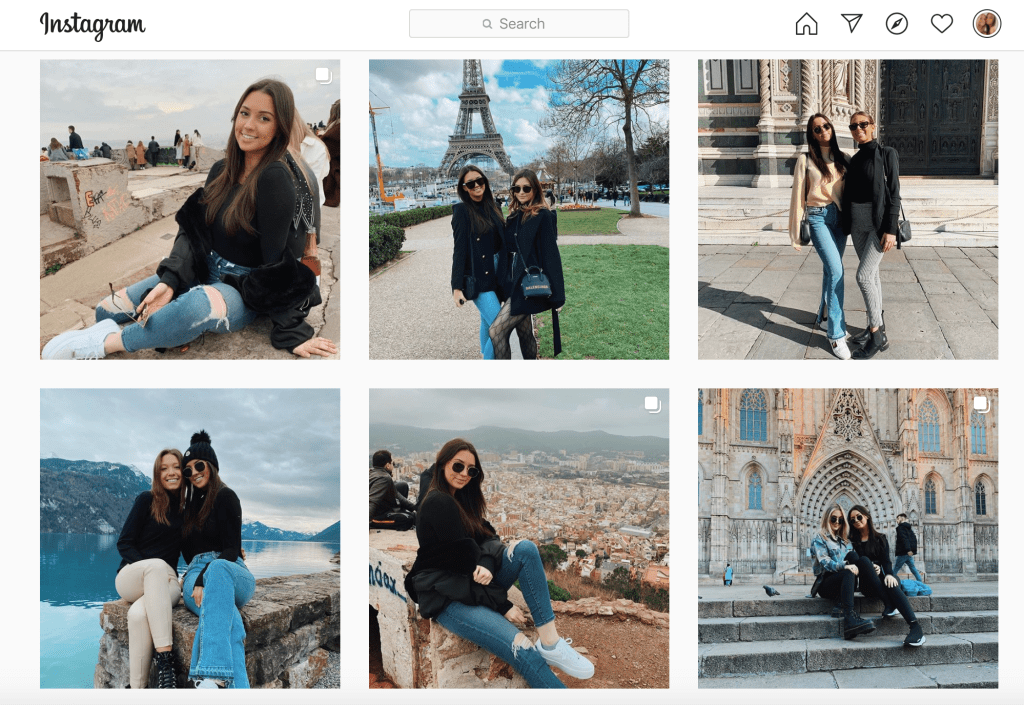
The social media platform that I used the most during my time in Barcelona was definitely Instagram. This platform for me is where I have a bigger outlet when it comes to followers, so I was able to have more people see my content while viewing what my other friends and family are up to all over the world. I would post a lot of my pictures with myself or with friends to Instagram, along with posting Instagram stories of more scenic photos. I loved posting Instagram stories because even though they were only posted for 24 hours, I would pin them to my profile highlights. This keeps the story there for people to view after the 24 hours are up. I even categorized each highlight based off of the places I was in, so if followers wanted to look back on my stories, they where I was while the photo was taken.
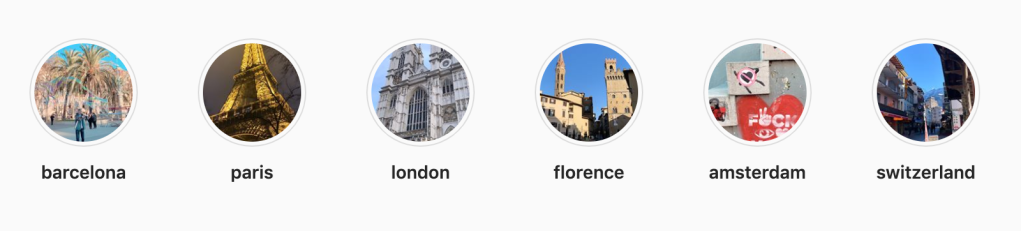
My most popular posts were my Instagram ones that I took while I was in different cities. I tried to capture a picture at each location I traveled to, including Paris, Florence, Switzerland, London, and a few other places. I think these posts were the most popular because my followers loved seeing me in all the places where I was traveling. Before going to Barcelona, I expressed to so many people about how excited and grateful I was to have the opportunity to travel to all of these places while being in Europe, so I think it was cool for them to actually see me there.
I think that the two months I was in Barcelona definitely helped in constructing my digital identity. I made a lot of friends while I was abroad and was able to connect with them on multiple platforms. Coming back home, I am still able to keep in touch with all of the people I met due to social media. Additionally, I posted a countless number of images and videos to my social media platforms. These all have continued to construct my digital identity by adding to my digital footprint and appearance and making my presence online even bigger.
I think the posts on all of my social media platforms definitely follow some sort of narrative. As a talked about earlier, I posted a lot of Instagram posts and Instagram stories everywhere I went. With every place I was able to explore, I would post the photo and then put the location of where the photo was taken at the top. I also pinned all of my different Instagram stories to the highlights on my profile, making a different highlight for each new place I went to. Along with Instagram, I would post to a lot to my Snapchat and use the different geotags to show all of my followers where I was in the world. From this, my social media followers were able to sequentially follow my abroad experiences and get a glimpse of the incredible time I was having.
https://www.china-briefing.com/news/chinas-corporate-social-credit-system-how-it-works/
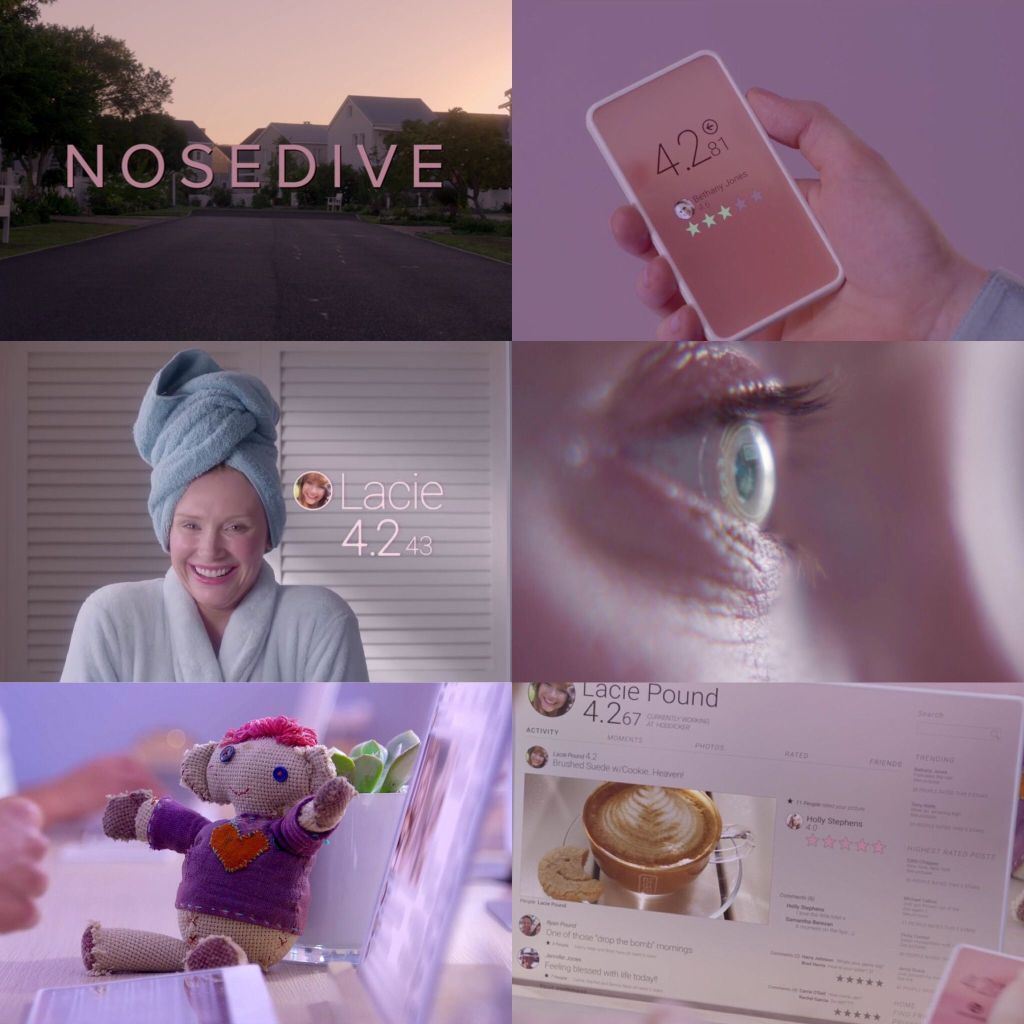
The Black Mirror episode Nosedive was an unexpectedly enlightening film that gave viewers a glimpse of how social media has the ability to take over in the future. The episode goes in depth about the true evils of social media and how it can turn a whole society upside down. Nosedive is centered around a social media app where people can rate each other based on interactions and social media presence. Ratings can vary from 0.0 to 5.0, with anyone above a 4.2 rating having a more “elite” status. With this high rating, you are looked at as superior in society and can even receive special perks that those with lower ratings don’t have the benefits of getting. Additionally, each person has a lens in their eyes with the app programs into it. This allows for easier access to the app and enables each person to see other ratings and posts just by glancing at them. It is essentially a society of fake people, some of which trying to keep their “elite” status while others simply don’t care. Members of this society are constantly monitoring others behaviors, along with their own. All it takes is one bad instance for someone to rate you with one star and your rating to go down drastically. The episode is centered around the main character, Lacy, who gets caught up in the app. She starts off by practicing her laugh in the mirror, thinking that the more natural she sounds, the higher rating she will receive. Lacy becomes obsessed with getting a high rating and takes extreme measures throughout the episode. Towards the end of the episode, Lacy’s rating starts to take a downfall due to her poor behavior. In reality, Lacy was acting out as any normal person would but this was simply just not acceptable behavior in this type of “perfect” society. Eventually Lacy gets arrested and ends up in jail, where they strip her of the app along with taking the lenses out of her eyes that enabled her to see posts and ratings. Although prison is supposed to be an unhappy place, Lacy was almost relieved to be there. She realized how much the app consumed her and was finally able to be her true self.
The intent of the episode Nosedive is to give viewers a glimpse of the future. Although that level of social media usage seems unattainable, it is starting to happen in front of our eyes. Our social media presence is slowly starting to be based off of ratings, directly relating to what is happening in Nosedive but on a lower level. A great representation of this is ridesharing apps such as Uber and Lyft. On this app, after every ride, drivers will give you a rating and you will be asked to rate the driver. Personally, I give the driver 5 stars just out of convenience. On the other hand, if you are a bad rider by being rude or disruptive, the driver can give you a low rating. If you have a low overall rating, drivers are likely to not accept your ride request because they don’t want to have to deal with that. Just like what was taking place in Nosedive, once you have a low score, it is very hard to get it back up. The is one of the many instances ratings allow people to make premature judgements. Instead of people knowing you for you, you are just a number. This whole concept could become much worse as social media continues to take over our world and the minds of individuals.
It is evident that social media can have its perks, but one bad move on a social media platform can lead to very negative things. Personally, I think social media can be used for a lot of good and enables there to be a lot more conversation and voices to be heard than in the past. But when these conversations become controversial and people start bringing in their own bias opinions, it can become toxic. Social media platforms such as Twitter, Instagram, and Facebook constantly show the bad side of social media and how things can really get nasty. One controversial opinion can lead to millions of negative feedback. In a recent article by Forbes, it states the following: “One of the reasons many of us avoid showing up on social media is the fear of public shame and judgment” [1]. Judgement is very prevalent in the social media world but is something that goes hand in hand with posting something controversial to the general public. Everyone is entitled to their own opinions and that is some that should be realized when posting something controversial to the Internet that is likely to receive backlash.
Social credit systems are an upcoming reality. The idea of social credit systems was developed in China and is essentially a system that gives each individual a score, something very similar to what was happening in the Black Mirror episode Nosedive. The score follows that individual and has an effect on all of the decisions they are allowed to make. The Chinese created this system in 2014 and it has now become a current reality for them. A Business Insider article explains the following: “Like private credit scores, a person’s social score can move up and down depending on their behavior. The exact methodology is a secret — but examples of infractions include bad driving, smoking in non-smoking zones, buying too many video games and posting fake news online” [2]. The idea of giving individuals a score to enable or limit them in personal decisions almost seems unreal. After watching Nosedive, I thought to myself how crazy and unimaginable that society was but then soon came to the realization of how this could potentially be our future. I think the whole concept of ratings are ridiculous and has the ability to bring out the absolute worst in people.
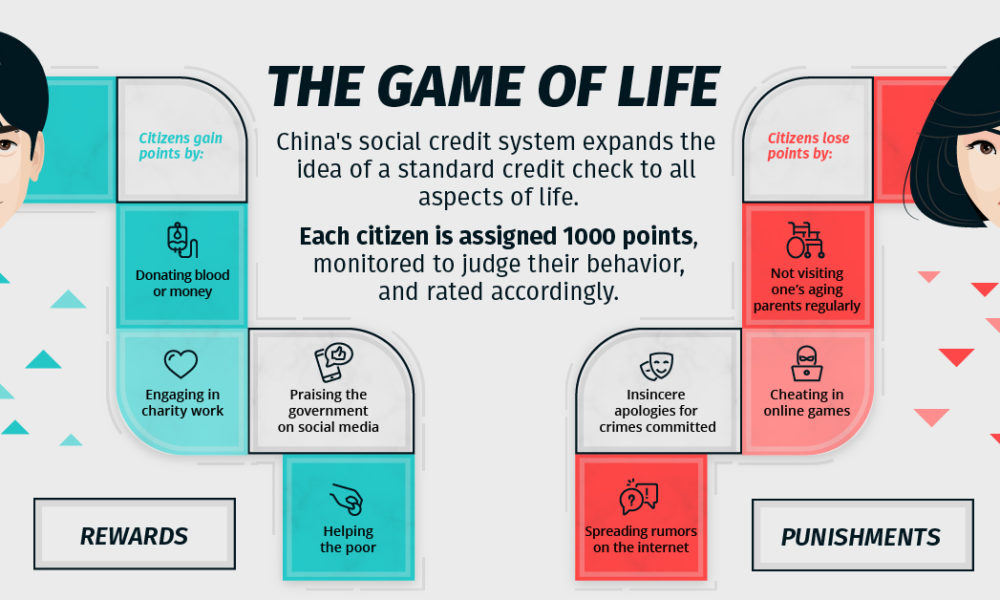
Citation 1: Burns, Stephanie. “How To Survive A Social Media Backlash.” Forbes, Forbes Magazine, 10 Dec. 2019, www.forbes.com/sites/stephanieburns/2019/12/10/how-to-survive-a-social-media-backlash/#2e2bf09a461d.
Citation 2: Ma, Alexandra. “China Has Started Ranking Citizens with a Creepy ‘Social Credit’ System – Here’s What You Can Do Wrong, and the Embarrassing, Demeaning Ways They Can Punish You.” Business Insider, Business Insider, 29 Oct. 2018, www.businessinsider.com/china-social-credit-system-punishments-and-rewards-explained-2018-4.
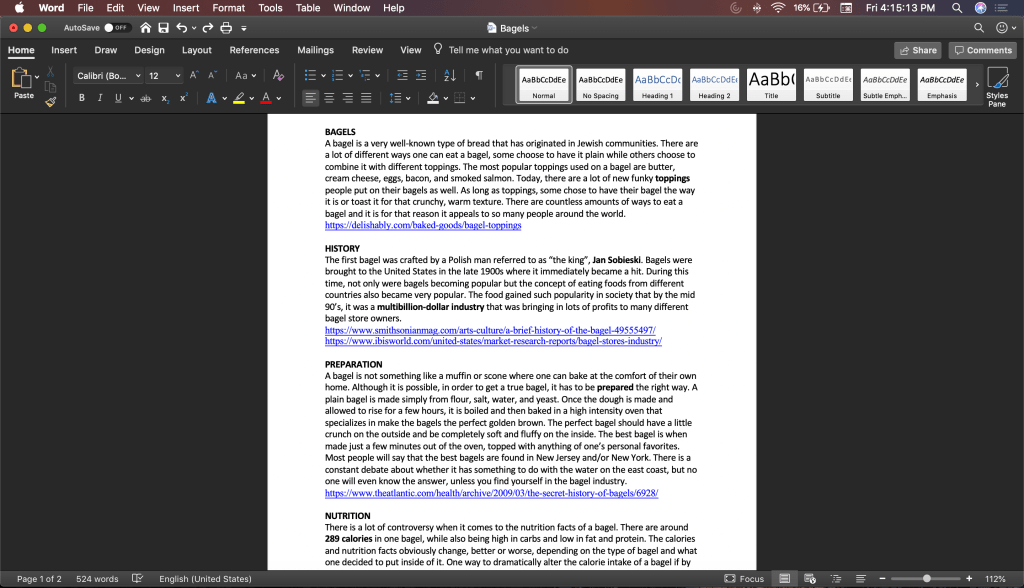
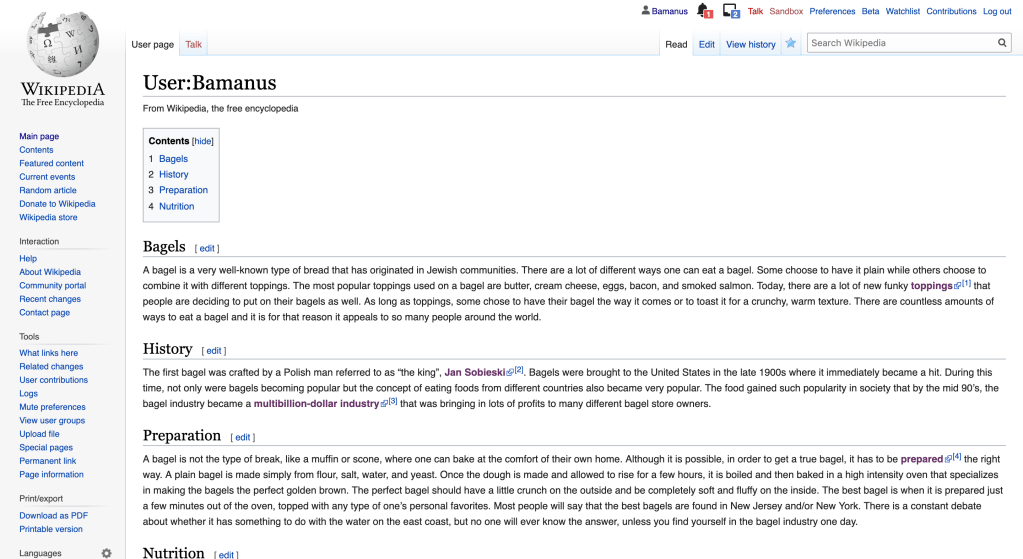
Overall, my experience using Wikipedia for the first time went very smoothly. As I do with most of my work for my Social Media class, I found it a lot easier to write everything out on a word document before pasting it to my Wikipedia template. After typing everything out, I then bolded the word(s) I wanted to hyperlink and placed the link at the bottom of the paragraph. The biggest problem I encountered during the process was learning how to use Wikipedia and actually edit my page. Because I have worked a lot with WordPress and other online editing sites, I knew what most of the icons meant but I can see how this could be difficult to understand for a first-time user. The two hardest things during the editing phase was hyperlinking other articles and then having to cite them. It took me a few tries to get it right and make sure the formatting looked normal . Once I figured the formatting out and how to properly use the tools, I was able to hyperlink the proper words and make sure that each new citation had a reference number that was placed next to the right word and then again at the bottom of the page.
In the past, I have only used Wikipedia to gain additional knowledge and insight about a topic I was researching. I never took the time to consider what was actually going on in the backend of the website and the steps that needed to be followed to come up with an educational page. To start off, you need to make an account. This process took about 1 minute and was actually one of the easiest sign-ups I have ever done. All you needed was a username and password. Once you create an account, the user is then able to create a page about honestly anything they desire. There is room to put in titles, headers, and sub headers, and then obviously any appropriate information you wish to provide about the given topic. Once published, it immediately becomes viewable to the public. You do have the ability to go back and edit it if you found a mistake after publishing. Once I got used to using Wikipedia, I found the whole process of creating and editing content to be extremely easy and almost self-explanatory.
There were not a lot of content and/or format requirements that I found Wikipedia required its users. The one thing I did find, which is almost inevitable, is that there must be text and content posted to a page in order to be published. The information must be credible, verifiable, appropriate, and unbiased. If it disregards one of these things Wikipedia will receive a notification and proceed to take it down once it is published. There were a lot of different formatting options when you are editing the page, but none of which are required to users. Users can create different types of headings, bullet or number lists, and even insert images, tables, and/or templates. All of which making the page more appealing to potential viewers.
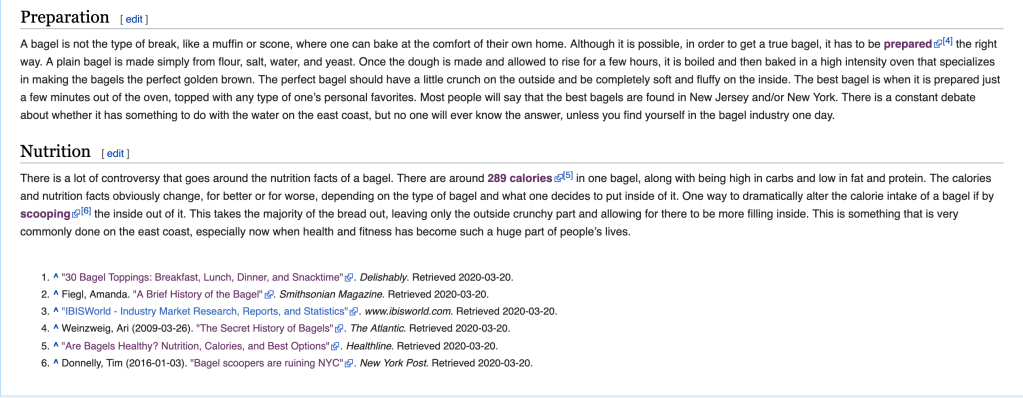
I 100% think a lot of concerns come up regarding the credibility of Wikipedia’s pages. It was so easy for me to create an account and add a page about information I was only familiar on. What if my information was wrong? What if someone used that incorrect information for their school project and was relaying the wrong information to his or her classmates and teacher? Nothing on Wikipedia is being monitored and you can essentially post what you chose to as long as it doesn’t get flagged for review. It is for obvious reasons why professors aren’t fond of using Wikipedia as a source for any assignments. Just because I did my research and published correct and credible information does not mean the other millions of users are doing the same. It is almost too easy to post something that is incorrect and it is for that reason that the credibility of Wikipedia will always be questioned.
We are at a point in time where the utilization of technology is at an all-time high. Being a part of the Millennial generation, we have had the privilege to witness firsthand life before technology along with the quick turnaround of almost everything being accessible at the touch of our fingertips. Growing up I got my first cell phone, a flip phone around $60, at the age of 10. Life was different back then. We would have playdates and play board games or just sit in a circle and talk for hours on end. Now, when you go out to eat you will most likely see a baby sitting in a highchair playing on their own iPad as a source of distraction from the rest of the table. You essentially have no life if you don’t have a smart phone or multiple social media accounts. Everything revolves around technology and the takeover just keeps on expanding.
When it comes to our generation, there are a lot of myths and truths that are spoken about. The Boston Globe Article, “8 myths and 5 truths about millennials”, does a great job at explaining the truths and fallacies of our generation and why. One of the myths in this article that really stood out to me was how our generation is slackers. The article stated the following: “‘By and large, they’re not as driven as my generation,’ retired Morgan Stanley CEO and chairman John Mack recently complained about us. Mack, a rather vocal member of the Silent Generation, is not alone. One survey found that only 55 percent of Americans think young adults work hard” [1]. When it comes to our generation, being lazy is almost what everyone will say to describe our work ethic. I understand where this conclusion stems from, being that we need and want everything instantly. On the other hand, when it comes to the work ethic of our generation, this does not hold true. We live in a world where employment is continuously more and more competitive and if you lack that determination and drive, you are out of consideration. I don’t think we are necessarily slackers; we just do the process in a different manner granted how we grew up and how immense the presence of technology is in our lives. I don’t think that just because we submit an application online or type our work instead of handwriting it makes us any less dedicated than anyone else in the older generations. We instead have the ability to get stuff done faster and most efficiently for everyone involved. This is only one of the countless myths that are spoken about Millennials, but at the end of the day, there are always going to be misconceptions made about us that just aren’t accurate.
Along with the myths of our generation, there are also conclusions made that most definitely hold true. In the article, “The 5 Truths That Define Millennials”, it speaks about the general opinions that do seem to be factual for our generation. One of the truths that stood out to me was how Millennials are hyper-connected. The article explains how “Millennials are an on-the-go and always-on generation. The evolution in technology has enabled them to be connected at all times and everywhere” [2]. Social media is something that is very present in all of our lives. It is a gateway for communication and connection at all costs. No matter where we are in the world, we are made aware of everything that is going on because of our relationship with social media and the internet. However, I don’t necessarily think this is a bad thing. Due to our hyper-connection, it enables us to be aware of what is going on around us and become more educated on it. I understand that our use of social media can sometimes be abused, but I think that in some ways it helps educate us to become more involved. Overall, I do think there is always going to be misconceptions of our generation and the other generations to come. But at the end of the day, some will be myths and some will always hold true whether we are accepting of it or not.
It is already evident that our generation, the Millennials, can sometimes abuse the power of social media. In some aspects it can be a benefit because it allows one to put themselves out there and express themselves in a unique and different way. On the other hand, social media can be a burden on some who do not know how to use it properly. In the Forbes article, “6 Ways Social Media Affects Our Mental Health”, it speaks about how much this internet obsession has been a strain on so many of our lives. The article quotes the following: “We fall into the trap of comparing ourselves to others as we scroll through our feeds, and make judgements about how we measure up. One study looked at how we make comparisons to others posts, in “upward” or “downward” directions—that is, feeling that we’re either better or worse off than our friends” [3]. With the abuse of social media, the people of my generation tend to put pressure on themselves when it comes to comparing how they look and appear compared to the others they see on the internet. This is a HUGE problem that comes hand and hand with social media. Millennials and the younger generations to come can obviously use it in a healthy and beneficial manner but it will also most likely take a negative toll on self image and mental wellness.
Henry Jenkins, a professor who studies media, quoted the following: “Since they live in digitalized platforms, millennials are often disconnected from the members of the previous generations. For the most part, rather than being community oriented, they are self-centered and self-absorbed. Perhaps, this why they are known as the “Generation Me”. The reason I think there is such a negative perspective pointed towards Millennials is because we are really the first generation who started to grow up with technology. Although it was not completely present when we were in our early years, it was still a huge part of our childhood and an even bigger part of our adult life. Yes, I do think being on so many digitalized platforms make us disconnected. But I also feel that it has changed the way we live our life for the better. We are more aware, more conscious, more alert. We are not the generation of self-centeredness or laziness but a generation who wants to strive with success and knowledge. Social media and technology doesn’t always have to be looked at as something that ruined our generation, but instead should be viewed as something that has helped us become brighter and better.
News & Views: Does time spent using digital technology and social media have an adverse effect on mental health, especially that of adolescents? Two scientists discuss the question in Nature and how digital devices might be used to improve well-being. https://t.co/NSO2afJ1ip
— Nature (@nature) February 12, 2020
Citation 1: BostonGlobe.com. “8 Myths and 5 Truths about Millennials – The Boston Globe.” BostonGlobe.com, The Boston Globe, 24 May 2017, http://www.bostonglobe.com/magazine/2017/05/24/myths-and-truths-about-millennials/lfGryVDq7Vpu1OfFGf77jL/story.html.
Citation 2: “The 5 Truths That Define Millennials.” Ipsos, http://www.ipsos.com/en/5-truths-define-millennials.
Citation 3: Walton, Alice G. “6 Ways Social Media Affects Our Mental Health.” Forbes, Forbes Magazine, 3 Oct. 2017, http://www.forbes.com/sites/alicegwalton/2017/06/30/a-run-down-of-social-medias-effects-on-our-mental-health/.
If you asked someone a few years ago what a meme was, they would probably look at you as if you had four eyes on your face. The concept of a meme came up a few years ago and ever since, has been a huge part of the internet culture. According to Tech Terms, “A meme is a concept or behavior that spreads from person to person. Examples of memes include beliefs, fashions, stories, and phrases” [1].
Richard Dawkins described 3 essential characteristics of memes: Fidelity, Fecundity and Longevity. When a meme has fidelity, it means that it has the ability to “hook” people into contributing their own version of the meme. Fecundity is when a meme has the ability to be transmitted, transformed, and modified. Lastly, longevity enables there to be memory within the meme.
Along with Dawkins three essential characteristics, there are three other additional characteristics that allow for a successful meme. The first one is that it needs to have humor. This characteristic is used to keep people constantly engaged. The second one is intertextuality. This one is the cross-references to a host of popular culture events, artifacts and practices through remixing practices. Lastly, there is juxtaposition. This maximizes the susceptibility of the idea being passed from mind to mind and is considered a part of the memes’ “hook”. When looking at the “Evil Kermit the Frog” meme, it carries all of the six essential characteristics of a meme and that is why it has been so famous throughout the internet.
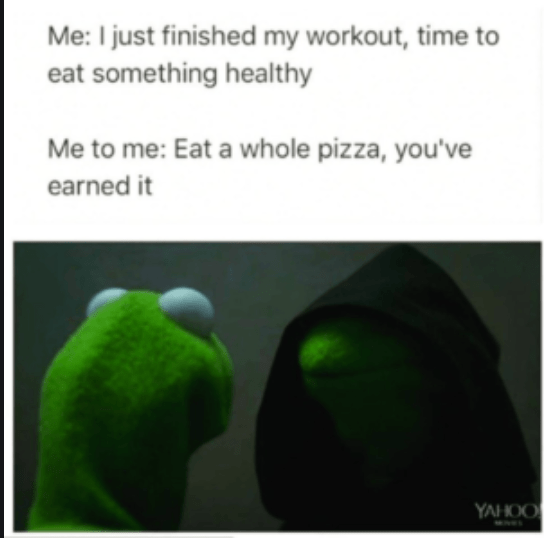
If you have never heard of the “Evil” Kermit the Frog meme, I am sure you have still stumbled across it on your Instagram, Twitter, or Facebook feed without realizing the meaning behind it. According to Know Your Meme, the popular meme originated in 2014 when the Muppets Most Wanted film was released. This film was where Kermit the Frog’s look-a-like character appeared “dressed in a black cloak” [2]. The website also states how the meme first gained its popularity: “On November 6th, 2016, a Twitter user tweeted a screenshot of Kermit the Frog standing next to a Sith version of himself with the caption ‘me: sees a fluffy dog / me to me: steal him’. Within 10 days, the tweet gained over 31,800 likes and 22,500 retweets” [2].
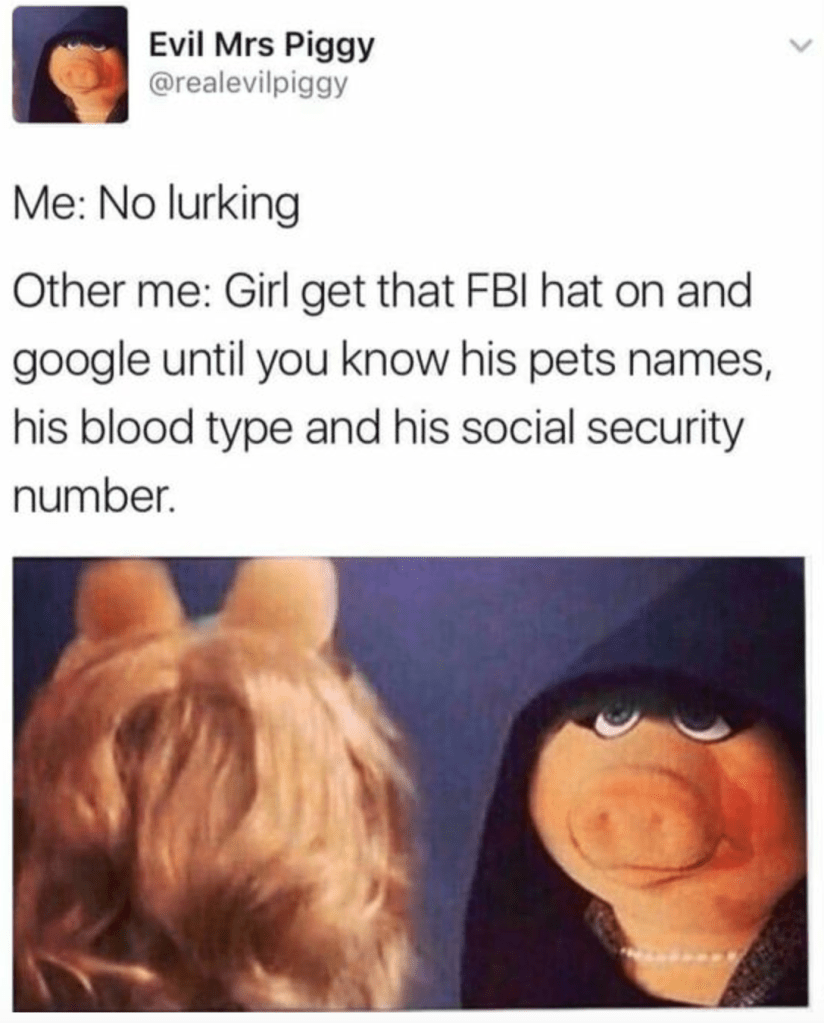
As the meme started gaining its popularity, everyone around the world started to retweet it. Soon after, people started taking the same picture that was on the meme and putting their own captions. Personalizing it. This is usually what happens in the world of memes because if someone likes the concept of it, they then want to make captions that themselves along with other can relate to and find humorous. With this popularity, it is evident that the meme would also undergo some other modifications. One of the most popular modifications this meme went through was becoming an “Evil” Miss Piggy meme, another well-known Muppets character, instead of the original Kermit the Frog meme. This once again allowed people the personalize the meme to make it more of their own.
Evil Kermit is a meme that depicts what appears to be a “good” Kermit and an “evil” Kermit talking to each other, with each Kermit representing opposing sides of one’s conscience. Evil Kermit is about your internal dialogue, frequently encouraging you to do things that might sound good, but probably aren’t a good idea.
Dictionary.com [3]
There are a lot of underlying reasons when it comes to why the rise to fame for the “Evil” Kermit the Frog meme was so immense. Yes, it is definitely funny and relatable to those on the internet but there are also a few cultural and sociological motivations of the meme itself. For one, it allows people to give a glimpse of what they are thinking personally. The main point of this meme is to portray what one is thinking at the moment along with what that “evil” side of you is also thinking at the same time. You can think of it as having an angel on one shoulder and a devil on the other.
We can’t forget Evil Kermit cause them memes was hilarious #TwitterMomentsOfTheDecade pic.twitter.com/RTyBINazxa
— Mike Martin (@iEkimNitram) December 1, 2019
The meme itself is an outlet for people to express their emotions. It enables for users to discretely post to the internet what they are feeling and thinking, good or bad. The best part of making memes is that being controversial is almost accepted. It’s a mechanism people utilize to get their opinion out there and at the end of the day, someone else is going to like what you have to say and relate to it. That is why the world of memes can be so good or so evil.
Citation 1: “Meme.” Meme Definition, 18 Nov. 2011, techterms.com/definition/meme.
Citation 2: “Evil Kermit.” Know Your Meme, 14 Jan. 2020, knowyourmeme.com/memes/evil-kermit.
Citation 3: Tudury, Leila. “What Does Evil Kermit Mean?” Dictionary.com, Dictionary.com, 23 Dec. 2019, http://www.dictionary.com/e/memes/evil-kermit/.
Using the web and social media is something that is very prevalent in today’s society. Growing up, I feel like we were there to see the epidemic of social media and how it has taken over almost everything we do. A few years ago, you had to carry all of your personal information on you along with the physical credit cards and so much more. We are currently in the start of 2020 and basically your whole life is embedded into one mobile device that needs facial recognition to access. Some may thing it is absolutely insane to put your whole world into one small device while others think that this is the world we live in and it just simply makes life easier. Personally, I put everything into my phone because that is what everyone else around me does. I can pull up my passport for a flight with a click of a button, use any credit card I have, or autofill my information into any website. Taking a step back to think if this is dangerous is an argument, I have with myself everything, but I never think to take away my digital footprint. I know there are people out there who can hack into systems and always strip me of my identity but for some reason, that thought doesn’t scare me. There are so many ongoing arguments when it comes to the web and the security that goes behind it but yet there has never been a moment in time where anyone was able to come to a happy medium.
Below is an article from the New York Times explaining how one can create a safer digital presence:
Net neutrality is the idea that internet service providers like Comcast and Verizon should treat all content flowing through their cables and cell towers equally. That means they shouldn’t be able to slide some data into “fast lanes” while blocking or otherwise discriminating against other material.
The WIRED Guide to Net Neutrality [1]
Net neutrality is something that enables there to be an open playing field. Without the concept of net neutrality, there would essentially be a monopoly in the broadband provider industry. It allows for there to be new technologies and companies to come in and provide their own services without being blocked or discriminated but the other providers. I widely used example is the one was starting to get explained in the quote above. A service like Verizon can not block one of their customers from using a service such as Netflix or Hulu to sway one towards using the other more often than not [1].
There is a very noticeable alignment between net neutrality and free speech. According to the article, An Attack on Net Neutrality Is an Attack on Free Speech, it is explained that “Mass consumption of entertainment products may be big business and may even help drive adoption, but it’s not new and empowering like the opportunity to participate in speech on an infinite variety of topics” [2]. Without net neutrality being present, the concept of free speech online could be taken away.
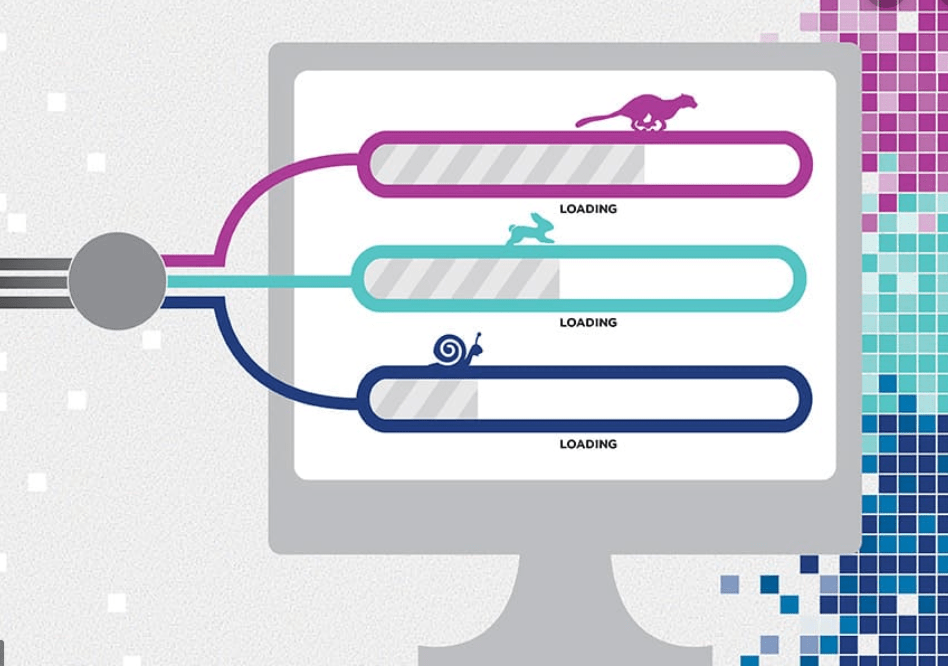
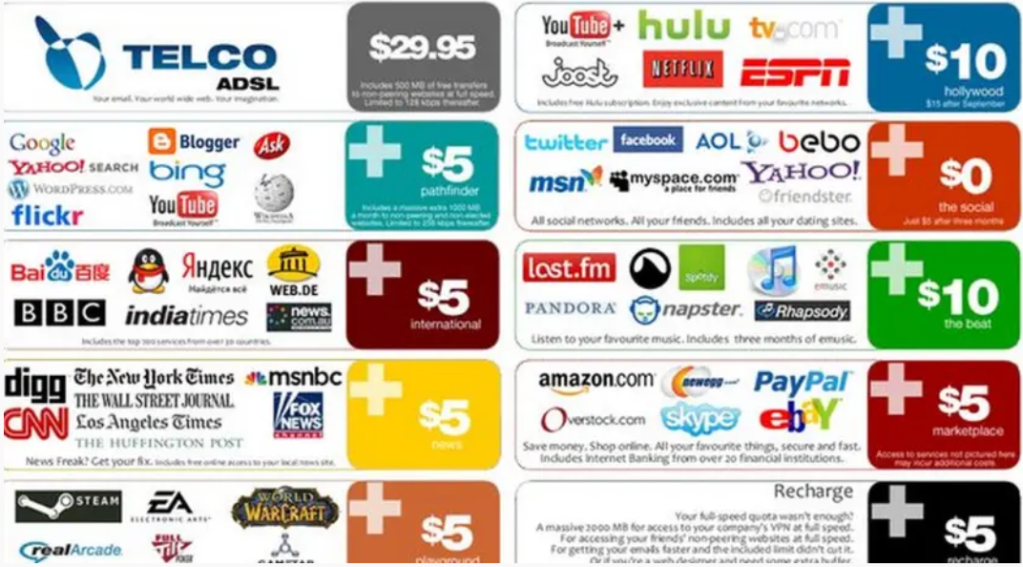
Without net neutrality, having fast speed access to sites is taken away. This is an ongoing problem in Portugal, where they are experiencing no net neutrality. The article, Without net neutrality in Portugal, mobile internet is bundled like a cable package, explains how the internet works without net neutrality [3]. Content is not being treated equally and that is resulting in out of pocket expenses to access websites that should be free. The photo below is represents the current situation in Portugal and as you can see, there is unfair pricing present due to the lack of net neutrality.
Personally, I have never felt personally affected by net neutrality. Truthfully, before this I have never even heard of net neutrality but now I know that it is a right everyone should be granted. It is our generation that needs to start to take initiative in ensuring everyone across the globe has equal rights on the internet.
A good go-to guide for baseline info on #NetNeutrality, patent trolls, Computer Fraud & Abuse Act, and general security and privacy guidelines for your digital devices. https://t.co/UjPhargnKu
— SLS Law & Policy Lab (@SLSPolicyLab) January 22, 2020
Citation 1: Finley, Klint. “Net Neutrality: Here’s Everything You Need To Know.” Wired, Conde Nast, 30 Oct. 2018, http://www.wired.com/story/guide-net-neutrality/.
Citation 2: McSherry, Corynne. “An Attack on Net Neutrality Is an Attack on Free Speech.” Electronic Frontier Foundation, 5 July 2017, http://www.eff.org/deeplinks/2017/06/attack-net-neutrality-attack-free-speech.
Citation 3: Coren, Michael J. “Without Net Neutrality in Portugal, Mobile Internet Is Bundled like a Cable Package.” Quartz, Quartz, 14 Dec. 2017, qz.com/1114690/why-is-net-neutrality-important-look-to-portugal-and-spain-to-understand/.
This is an example post, originally published as part of Blogging University. Enroll in one of our ten programs, and start your blog right.
You’re going to publish a post today. Don’t worry about how your blog looks. Don’t worry if you haven’t given it a name yet, or you’re feeling overwhelmed. Just click the “New Post” button, and tell us why you’re here.
Why do this?
The post can be short or long, a personal intro to your life or a bloggy mission statement, a manifesto for the future or a simple outline of your the types of things you hope to publish.
To help you get started, here are a few questions:
You’re not locked into any of this; one of the wonderful things about blogs is how they constantly evolve as we learn, grow, and interact with one another — but it’s good to know where and why you started, and articulating your goals may just give you a few other post ideas.
Can’t think how to get started? Just write the first thing that pops into your head. Anne Lamott, author of a book on writing we love, says that you need to give yourself permission to write a “crappy first draft”. Anne makes a great point — just start writing, and worry about editing it later.
When you’re ready to publish, give your post three to five tags that describe your blog’s focus — writing, photography, fiction, parenting, food, cars, movies, sports, whatever. These tags will help others who care about your topics find you in the Reader. Make sure one of the tags is “zerotohero,” so other new bloggers can find you, too.

 Brooke's Blog